
 Image 1 of 1
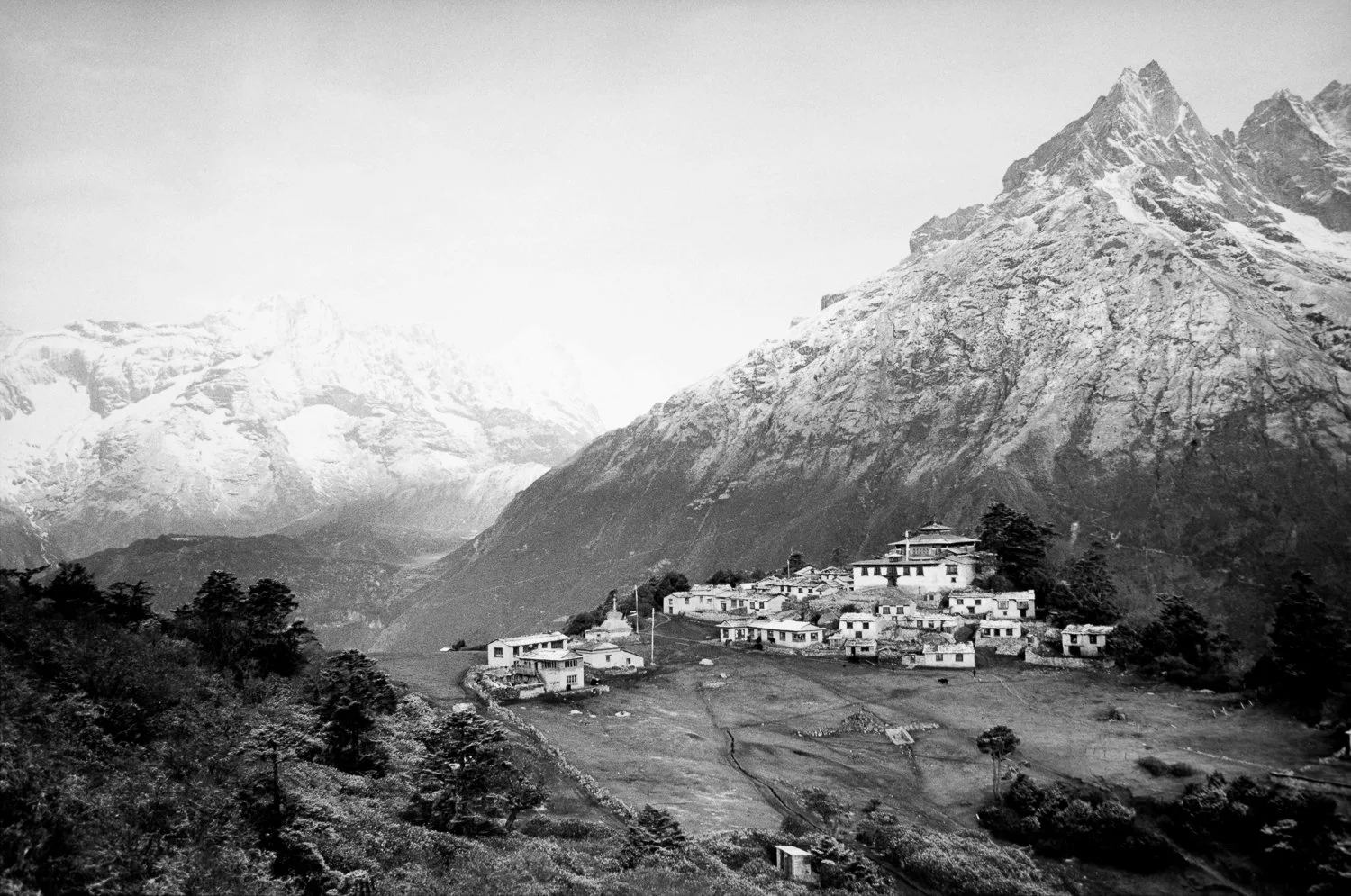
CLICK IMAGE TO VIEW THE FULL PRINTSet high in the Khumbu region of Nepal, Thyangboche Monastery rests on a ridge overlooking some of the world’s most celebrated peaks, including Everest, Lhotse, and Ama Dablam. The monastery serves as both a spiritual center for the Sherpa people and a place of reflection for those traveling through the region.
For climbers and trekkers, the journey to Thyangboche offers a transition from the physical demands of travel to a quieter, more contemplative experience. The rhythms of the monastery—prayer, ritual, and daily life—stand in contrast to the intensity of climbing, yet are deeply connected to the same environment.
The presence of the monastery reflects a long-standing relationship between people and the mountains, one grounded in respect and awareness. Visitors are reminded that the peaks are not only objectives to be climbed but also places of meaning and reverence.
In this setting, the vast scale of the Himalaya is balanced by human presence, tradition, and belief. The monastery provides a point of stillness within a landscape defined by movement, weather, and elevation.
THYANGBOCHE MONASTERY, Khumbu region, Nepal, 1986.
Photo: Tom Frost
CLICK IMAGE TO VIEW THE FULL PRINTSet high in the Khumbu region of Nepal, Thyangboche Monastery rests on a ridge overlooking some of the world’s most celebrated peaks, including Everest, Lhotse, and Ama Dablam. The monastery serves as both a spiritual center for the Sherpa people and a place of reflection for those traveling through the region.
For climbers and trekkers, the journey to Thyangboche offers a transition from the physical demands of travel to a quieter, more contemplative experience. The rhythms of the monastery—prayer, ritual, and daily life—stand in contrast to the intensity of climbing, yet are deeply connected to the same environment.
The presence of the monastery reflects a long-standing relationship between people and the mountains, one grounded in respect and awareness. Visitors are reminded that the peaks are not only objectives to be climbed but also places of meaning and reverence.
In this setting, the vast scale of the Himalaya is balanced by human presence, tradition, and belief. The monastery provides a point of stillness within a landscape defined by movement, weather, and elevation.
THYANGBOCHE MONASTERY, Khumbu region, Nepal, 1986.
Photo: Tom Frost