
 Image 1 of 1
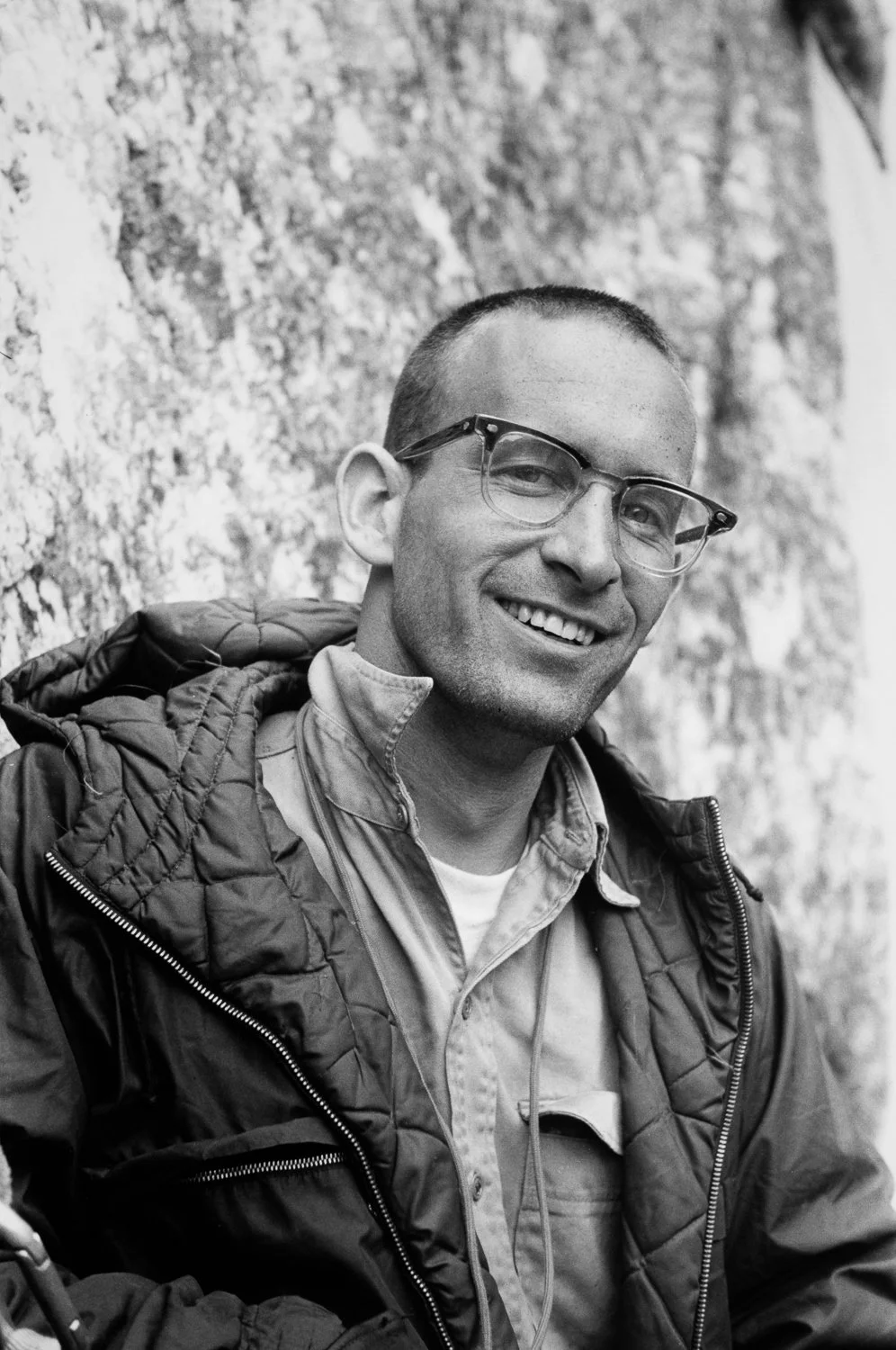
CLICK IMAGE TO VIEW THE FULL PRINTRoyal and I enthusiastically greet each other here at the White Flakes belay both having just survived the Chimney of Horrors on the northwest face of Higher Cathedral Spire.
“The climb gained instant notoriety for one pitch, the Chimney of Horrors, a nightmare Robbins had first led on the 1960 attempt. Sixty feet high, narrow, overhanging, and flared, with nary a crack for protection, this slot absolutely deserved its name. Robbins described the sight as ‘psychologically devastating’ in a Summit article. Nevertheless, he struggled upward, retreated slightly to place a protection bolt, and then continued, heart in mouth. ‘The consolation which climbers have in most tight chimneys,’ he wrote, ‘namely the possibility of jamming to a standstill if a slip occurs, was not present in this one…. Near the top I felt I was extending myself to the utmost and an eighty-foot fall was the alternative to adhering to the rock.’ At the top came that most unsettling of techniques: placing an aid pin far, far above the last protection and gingerly standing up on it. This lead set a standard for boldness, and from this day onward I was not alone in regarding Robbins as Yosemite’s best climber.” (Steve Roper, Camp 4)
Roper recognized that climbing, first and foremost, is an internal activity. “Robbins saw that climbing big walls in good style could do wonders for the soul. Climbing, for him, tended to be a spiritual exercise: not man overcoming the rock with garrison tactics, but man striving and reaching for deeper meaning. If you pushed into the unknown, then perhaps you’d discover something about yourself.” (Camp 4)
ROYAL ROBBINS at the White Flakes belay on the NW face of Higher Cathedral Spire, Yosemite National Park, California, May 1961.
Photo: Tom Frost
CLICK IMAGE TO VIEW THE FULL PRINTRoyal and I enthusiastically greet each other here at the White Flakes belay both having just survived the Chimney of Horrors on the northwest face of Higher Cathedral Spire.
“The climb gained instant notoriety for one pitch, the Chimney of Horrors, a nightmare Robbins had first led on the 1960 attempt. Sixty feet high, narrow, overhanging, and flared, with nary a crack for protection, this slot absolutely deserved its name. Robbins described the sight as ‘psychologically devastating’ in a Summit article. Nevertheless, he struggled upward, retreated slightly to place a protection bolt, and then continued, heart in mouth. ‘The consolation which climbers have in most tight chimneys,’ he wrote, ‘namely the possibility of jamming to a standstill if a slip occurs, was not present in this one…. Near the top I felt I was extending myself to the utmost and an eighty-foot fall was the alternative to adhering to the rock.’ At the top came that most unsettling of techniques: placing an aid pin far, far above the last protection and gingerly standing up on it. This lead set a standard for boldness, and from this day onward I was not alone in regarding Robbins as Yosemite’s best climber.” (Steve Roper, Camp 4)
Roper recognized that climbing, first and foremost, is an internal activity. “Robbins saw that climbing big walls in good style could do wonders for the soul. Climbing, for him, tended to be a spiritual exercise: not man overcoming the rock with garrison tactics, but man striving and reaching for deeper meaning. If you pushed into the unknown, then perhaps you’d discover something about yourself.” (Camp 4)
ROYAL ROBBINS at the White Flakes belay on the NW face of Higher Cathedral Spire, Yosemite National Park, California, May 1961.
Photo: Tom Frost