
 Image 1 of 1
Click image to view the full printRoper writes about the natural features of the Salathé Wall climb:
“Most impressive of all were two awesome, and connected, sections near the top: a tiered ceiling they simply called the Roof and the overhanging wall just above, dubbed the Headwall. These two sections didn’t need complex names; they are classics of the genre. The ceiling jutted out perhaps twelve feet, yet the tiers contained hidden but near-perfect cracks, and Frost nailed this quickly. Above lay a 150-foot headwall, tilted five degrees beyond the vertical. Bottomed and flared cracks shot up this sober and grainy expanse, but pitons nevertheless stuck long enough for upward progress. The exposure defied description. An object let loose from here will spin free for about 400 feet before brushing the near-vertical cliff below. Seconds later it will kiss the wall two or three times before exploding into the forest, 2,000 feet below.” (Steve Roper, Camp 4)
We had spotted the Salathé Roof, and the single crack running up the Headwall, during our reconnaissance from El Cap Meadow several days before beginning the climb. It looked spectacular, even from the ground. But the full force of the exposure Roper describes did not reveal itself until we started out into that spacey place. It was an experience of a lifetime.
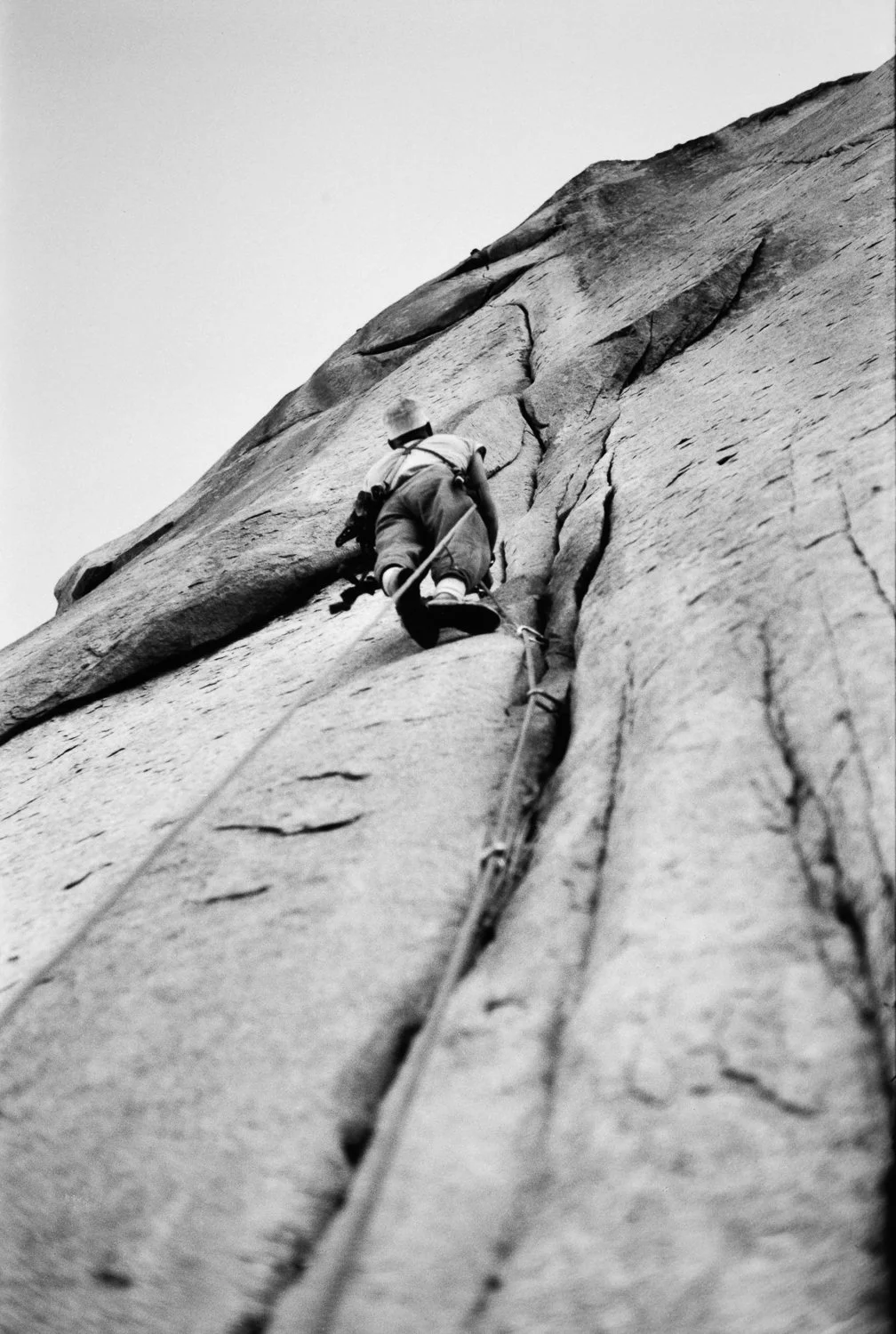
The lower portion of the Headwall crack was badly flared, making placements difficult. I stopped for this belay as soon as a solid anchor was achieved. Chuck continued upward establishing a classic aid pitch which, to our astonishment, is occasionally climbed free.
CHUCK FOLLOWS HEADWALL CRACK, Pratt leads the first Headwall pitch on the Salathé Wall, El Capitan, Yosemite. First ascent by Royal Robbins, Chuck Pratt, and Tom Frost, 9½ days, September 1961.
Photo: Royal Robbins
Click image to view the full printRoper writes about the natural features of the Salathé Wall climb:
“Most impressive of all were two awesome, and connected, sections near the top: a tiered ceiling they simply called the Roof and the overhanging wall just above, dubbed the Headwall. These two sections didn’t need complex names; they are classics of the genre. The ceiling jutted out perhaps twelve feet, yet the tiers contained hidden but near-perfect cracks, and Frost nailed this quickly. Above lay a 150-foot headwall, tilted five degrees beyond the vertical. Bottomed and flared cracks shot up this sober and grainy expanse, but pitons nevertheless stuck long enough for upward progress. The exposure defied description. An object let loose from here will spin free for about 400 feet before brushing the near-vertical cliff below. Seconds later it will kiss the wall two or three times before exploding into the forest, 2,000 feet below.” (Steve Roper, Camp 4)
We had spotted the Salathé Roof, and the single crack running up the Headwall, during our reconnaissance from El Cap Meadow several days before beginning the climb. It looked spectacular, even from the ground. But the full force of the exposure Roper describes did not reveal itself until we started out into that spacey place. It was an experience of a lifetime.
The lower portion of the Headwall crack was badly flared, making placements difficult. I stopped for this belay as soon as a solid anchor was achieved. Chuck continued upward establishing a classic aid pitch which, to our astonishment, is occasionally climbed free.
CHUCK FOLLOWS HEADWALL CRACK, Pratt leads the first Headwall pitch on the Salathé Wall, El Capitan, Yosemite. First ascent by Royal Robbins, Chuck Pratt, and Tom Frost, 9½ days, September 1961.
Photo: Royal Robbins